Soil stabilisationFor a solid foundation
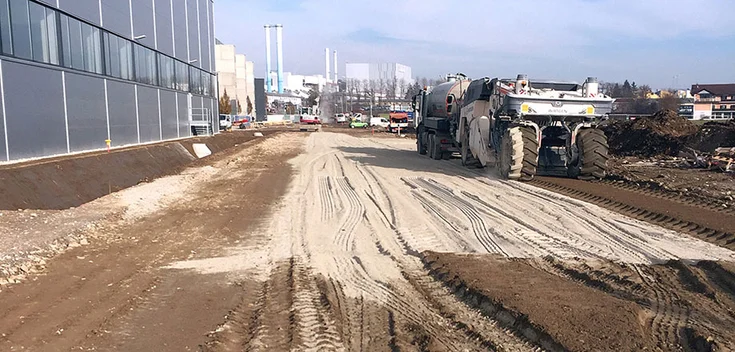
With three soil recyclers and the associated spreading units, ÖBA is one of the largest soil stabilisation companies in Austria.
© PORR
Soil improvement using the mixed-in method
By using a precisely calibrated mix ratio of binder to aggregate, a base course is produced that offers optimum resistance to external factors such as traffic, moisture or frost and, as an upper bound base course, provides an ideal sub-base for the subsequent road structure.
The type of base course produced depends on the binder used:
- Cement-stabilised base courses (ST-Z).
- Base courses stabilised with TSB binder (ST-T).
- Bitumen-stabilised base courses (ST-B).
- Base courses stabilised with bitumen and cement (ST-BZ).
- Soil stabilisation using lime, cinder or mixed binder.
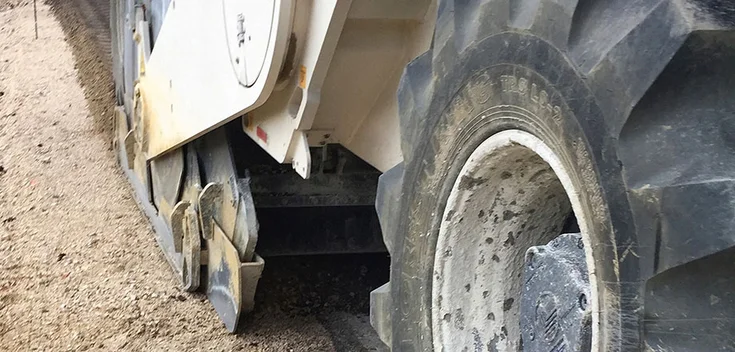
ÖBA carries out soil improvement using the in-situ mixing method. In this process, the base material applied to the respective sub-base is mixed with the binder by a recycler and then compacted.
© PORR
Rehabilitation of lightly trafficked asphalt roads
Asphalt roads that are subject to less heavy traffic can often be rehabilitated with minimal effort. This involves mixing the existing sub-base, the asphalt surface and – where necessary – base course material together to form a new, stable road structure.
Contact person